We isolated the source of the audio issues. The slap-back from the back walls, then return slap-back from the back of the stage is causing a really distracting effect.
EQ’ing out the lows helps eliminate the distraction, but impacts the sound quality. From the recording, we set the high pass filter (HPF) to about 200 Hz. This removed the “rumble” and really cleaned it up a quite a bit.
Each sound tech needs to implement this EQ setting in their respective scene.
On Thursday, 10/7, we will look at the positioning of the main speakers, but since the lows are the problem, we expect that reorienting the loudspeakers will only have a minor effect. The spec for those EV SX100 loudspeakers is about 65×65, however, that doesn’t hold throughout the entire frequency range. The datasheet doesn’t show the polar plots of the loudspeaker, but the beam width plot shows the pattern breaking down to 100+ degrees below about 1kHz. Once you get down to about 200Hz, it’s basically an omni-directional loudspeaker.
The problem with that room is that there’s already a lot of absorption in there. There’s ceiling tile, relatively thick carpet, pew cushions, and services are usually packed, so there are a lot of people in there absorbing sound. The net effect of that should be a very dry room. We have a problem with the front and back walls being parallel and then the angled walls at the back of the room reflecting sound back to the stage. While absorption panels will help knock down the reflections, it will make the room even more dry.
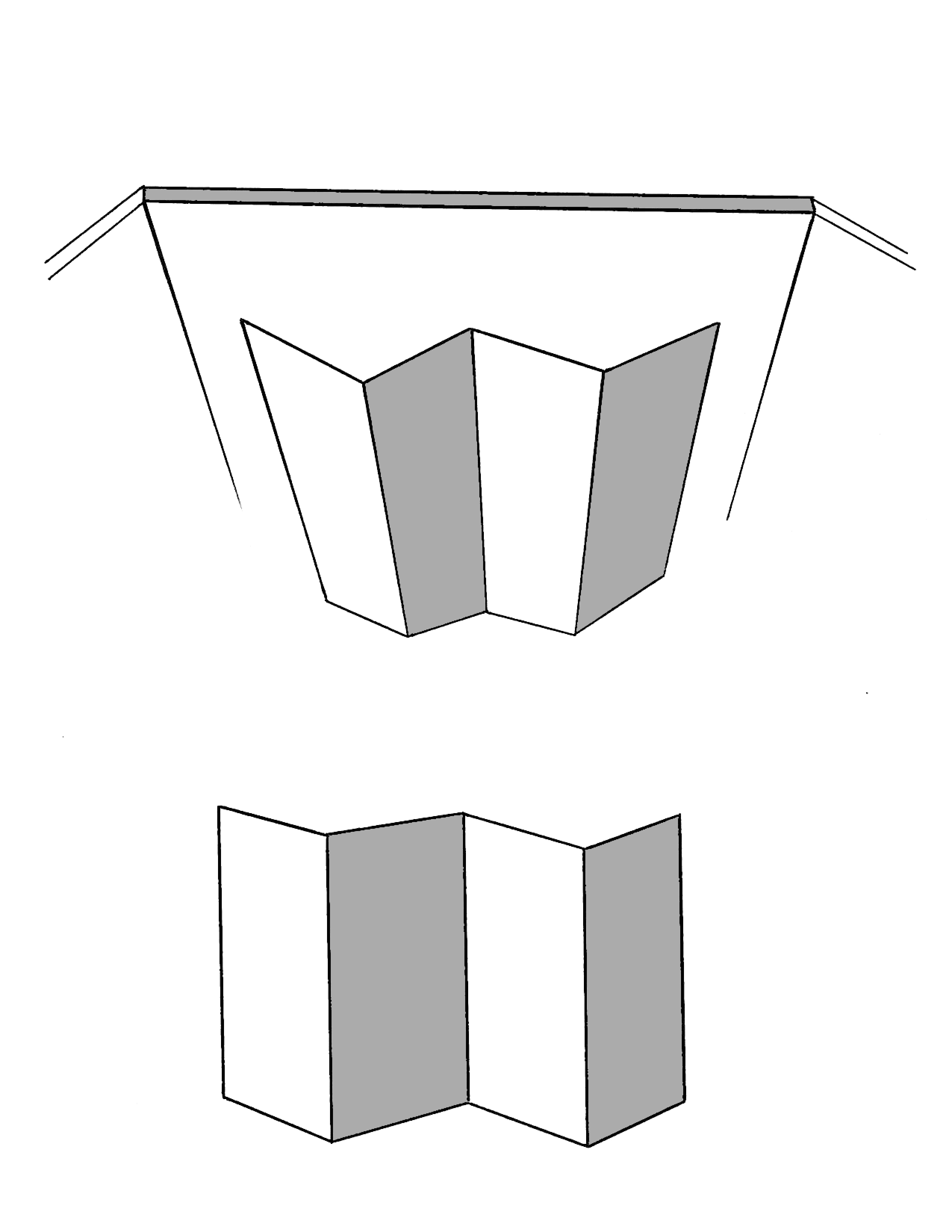 It seems like a better option to install some diffusing panels to scatter the audio off the back wall as opposed to directly reflecting it back to the stage. So, the next plan is to mount some panels using 4×8 sheets of drywall mounted to the wall in a “W” pattern. Below is an image of what this should look like when installed.
In addition to that, the stage backdrop for the previous sermon series actually helped cut down this slap-back. Removing staging backdrop fabric has made this more prominent. So, we also should consider using another stage backdrop on the back wall or setup curtain wings on the stage to help absorb some of it.
UPDATE 10/7/2010
We adjusted the speakers some, which helped reduce some slap back. But, that was not a substantial change. We will proceed with planning the build-out of the deflection panels on the FOH walls.
The biggest road block is with the lows from the EV SX100 speakers. They are positioned close enough together that the omni-directional sound of the lows (200Hz) is causing the two mains to collide producing this effect.
There are two distinct issues.
1. The slap-back needs to be deflected (not absorbed)
2. The colliding of the low frequencies at the position between the two EV SX100 main speakers
Thank you to Evan Koehn, Brent Haag, and Duke DeJong for your help in working through these issues.
